


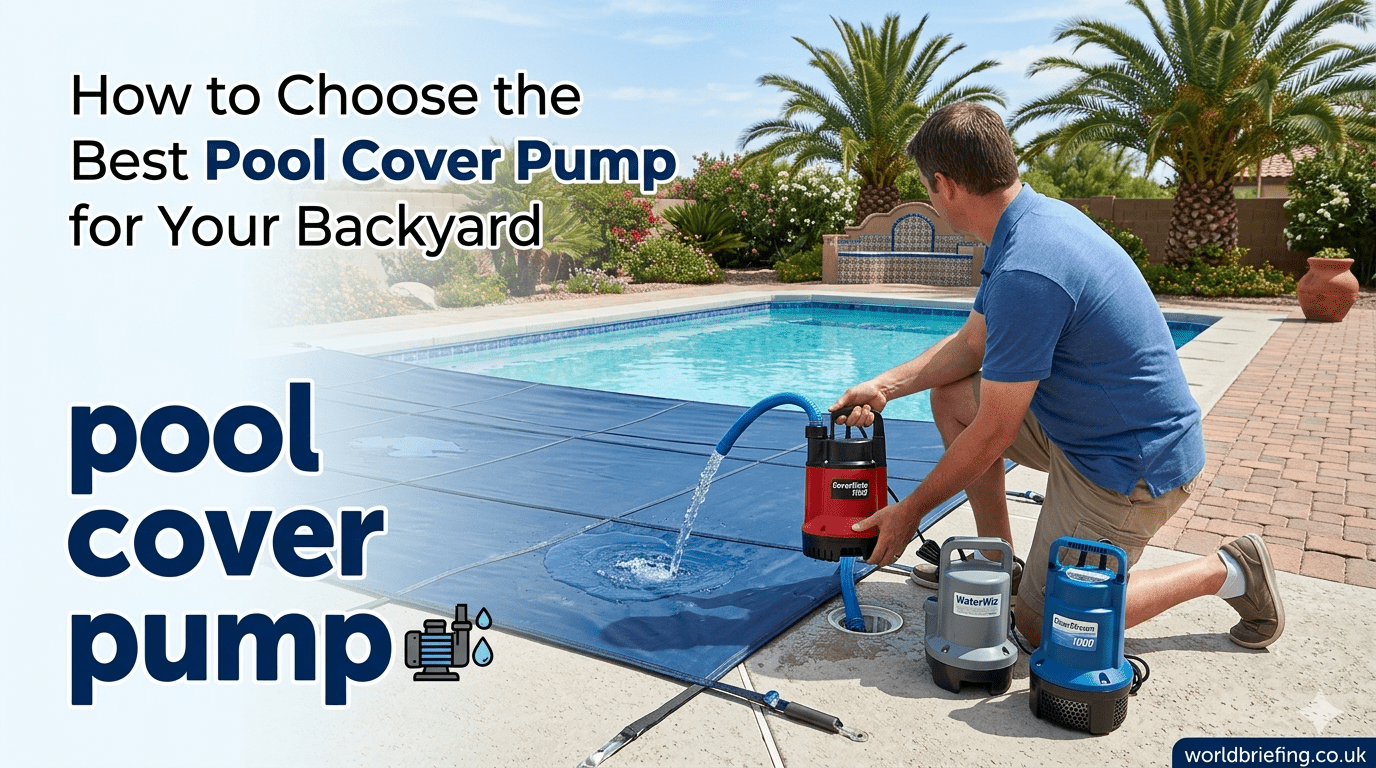
Owning a backyard swimming pool is a lot of fun during the hot summer months. However, taking care of it during the winter can be a very big job. When heavy rain falls or winter snow melts, water collects right on top of your winter fabric. This heavy standing water can easily damage or tear your expensive backyard investment.
To fix this common problem, you need a smart tool called a pool cover pump. This helpful device sits right on top of the fabric and pushes the unwanted rainwater away safely. It keeps your backyard neat, clean, and completely safe all winter long. Every pool owner needs one of these handy tools in their garage.
Table of Contents
What is a Pool Cover Pump?
A pool cover pump is a small, specialized machine built to move water from flat surfaces. It uses a small electric motor to suck up standing puddles and send them through a garden hose. You can place it directly in the middle of your saggy winter tarp where water gathers.
These machines are completely waterproof because they must work submerged under deep puddles. They are lightweight, durable, and very easy for anyone to move around the yard. Using one saves you from lifting heavy, water-logged tarps by hand every single week.
Key Equipment Specifications
| Feature Type | Standard Utility Details |
| Power Source | Corded Electricity (110V AC) |
| Gallons Per Hour | 500 to 1800 GPH |
| Hose Connection | Standard 3/4 inch Garden Hose |
| Material Build | Thermoplastic Corrosion-Resistant Body |
| Activation Mode | Manual Switch or Automatic Sensor |
| Average Weight | 4 to 8 Pounds |
The Big Danger of Heavy Standing Water
Many homeowners do not realize how heavy a simple puddle of rainwater can actually be. Just one gallon of water weighs over eight pounds! When hundreds of gallons pile up on your winter tarp, the total weight becomes massive. This extreme pressure stretches out your winter fabric and pulls hard on the concrete anchor blocks.
If you do not use a pool cover pump regularly, your protective tarp might snap right in half. This allows dirty, freezing water and rotting leaves to dump straight into your clean swimming water. Cleaning up that messy disaster in the spring will cost you a lot of extra time and money.
Choosing Between Manual and Automatic Models
When you go shopping for a new pool cover pump, you will find two main styles available. The first type is a manual machine, which requires you to plug it in yourself. You have to watch it carefully and unplug it when the puddle is completely gone.
The second type is an automatic machine, which uses smart electronic sensors to detect water levels. An automatic pool cover pump turns itself on whenever it senses a deep puddle on the fabric. Once the surface is dry, it shuts itself off to save electricity and protect the motor.
How Fast Can These Machines Move Water?
Speed is a very important factor when choosing the right equipment for your backyard setup. Water movement is measured in a unit called Gallons Per Hour, which people shorten to GPH. A smaller pool cover pump might move around 500 GPH, which works well for small vinyl tarps.
If you live in an area with massive rainstorms, you should choose a model that moves 1500 GPH. A high-speed pool cover pump clears off giant backyard puddles in just a few minutes. This prevents water from freezing into heavy ice sheets during freezing winter nights.
Simple Steps to Set Up Your Machine
Setting up your brand new pool cover pump is a very simple task that takes five minutes. First, attach a standard green garden hose to the side nozzle of the machine. Next, carefully place the flat base of the machine directly into the deepest puddle on the fabric.
Make sure the discharge hose runs downhill and away from your house foundations. Finally, plug the long electrical cord into a safe outdoor outlet with a built-in circuit breaker. Your pool cover pump will start humming quietly and draining the unwanted water away instantly.
Keeping Leaves and Debris Out of the Motor
Fall weather brings a lot of colorful leaves, small twigs, and dirt into your backyard. If these items get sucked into your pool cover pump, they can easily clog the small spinning blades. A clogged motor will overheat quickly and might stop working permanently.
To prevent this issue, most good machines come with a wide plastic strain base. This base acts like a protective shield to block large leaves while letting water pass through freely. You should clean this plastic shield once a week to keep the machine running perfectly.
Cold Weather Tips for Freezing Winter Days
Winter weather can be very brutal on outdoor power tools and plastic garden equipment. Water expands when it freezes into solid ice, which can easily crack the inside of your plastic housing. You must take special care of your pool cover pump during freezing blizzards.
Never leave a manual model sitting inside a frozen solid block of ice on your backyard tarp. If the weather gets too cold, pull your automatic pool cover pump out of the water for a day. Store it inside a warm garage until the afternoon sun melts the thick ice sheets.
Saving Money on Future Backyard Repairs
Investing a little bit of money into a good pool cover pump saves you thousands later. Replacing a ruined vinyl pool liner or buying a brand new winter safety fabric is incredibly expensive. A small utility tool prevents those costly backyard accidents from happening in the first place.
It also protects your backyard grass from getting flooded with stagnant pool chemicals. By directing the old rainwater into a proper drainage ditch, you keep your lawn looking green and healthy. It is a smart choice for your wallet and your property value.
Summary of Smart Backyard Protection
We have learned how important it is to keep heavy rainwater off your winter safety fabric. Using a reliable pool cover pump makes backyard maintenance simple, safe, and stress-free all winter long. Whether you choose a manual model or a smart automatic sensor machine, you protect your swimming area. Keep your equipment clean, check it after major storms, and enjoy a clean pool next spring.
Frequently Asked Questions
Can I leave my pool cover pump outside all winter long?
Yes, you can leave an automatic pool cover pump outside if it is designed for winter use. However, you must remove it if the water turns into thick, solid ice to protect the plastic casing.
How do I stop the machine from clogging with autumn leaves?
Always use the protective plastic strainer base that comes with your device. Check the bottom of your pool cover pump every few days and wipe away any stuck leaves with your hands.
Can I use a regular garden hose with my new device?
Yes, almost every pool cover pump uses a standard three-quarter-inch thread connection. This means you can easily screw your regular backyard garden hose right onto the side of the machine.
What happens if the machine runs when there is no water?
If a manual pool cover pump runs completely dry for too long, the motor can overheat and break. Automatic models are much safer because they turn off by themselves when the surface is dry.
Where should I point the discharge hose in my yard?
You should direct the discharge hose toward a street storm drain or a low spot in your yard. Make sure the water flows far away from your home foundation and your neighbor’s property line.
How many years does a typical utility pump last?
A high-quality pool cover pump will easily last between three to five years if you care for it. Keep it clean, store it indoors during summer, and never drop it on hard concrete surfaces.
Tell Us About Your Backyard Setup!
Do you prefer using a manual machine or a hands-free automatic sensor model for your yard? Have you ever had a tarp rip from heavy winter snow or rain? Leave a comment below to share your tips, or share this helpful guide with other homeowners!
