


Introduction
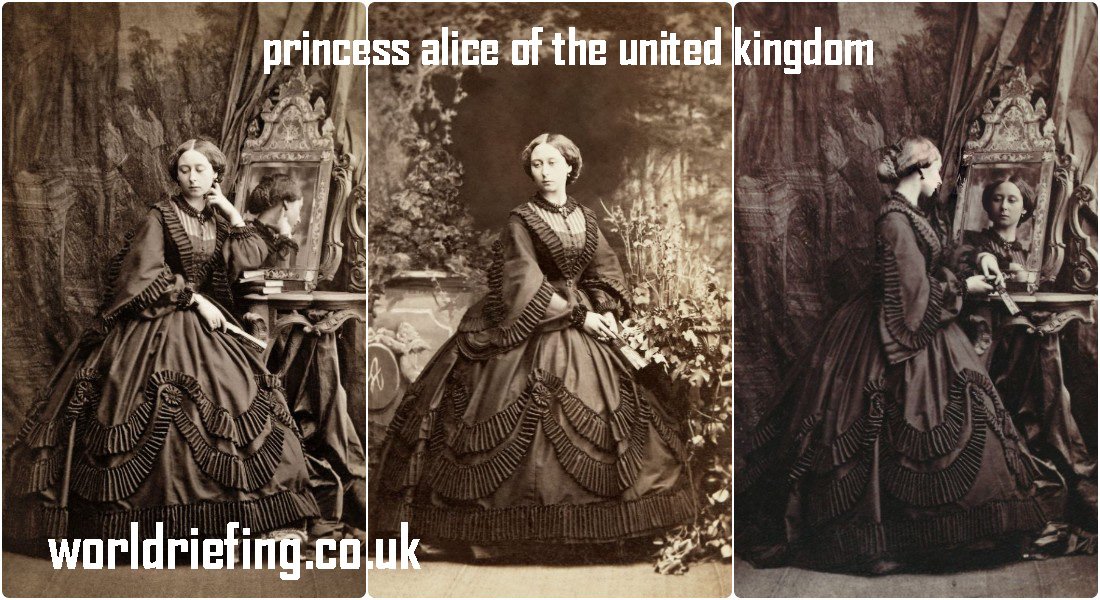
The history of European royalty is filled with remarkable personalities whose lives reflected both privilege and responsibility. Among these figures stands Princess Alice of the United Kingdom, a royal woman remembered not only for her noble birth but also for her humanitarian spirit, intellectual curiosity, and dedication to social reform.
Born during a transformative period in British and European history, Princess Alice became one of the most admired daughters of Queen Victoria and Prince Albert. Her life intertwined royal traditions with deep compassion for ordinary people, especially during times of war, illness, and social change.
This comprehensive article explores the life, family background, achievements, challenges, and enduring influence of Princess Alice of the United Kingdom, offering a detailed look at one of the most respected royal figures of the nineteenth century.
Early Life and Royal Birth
Birth and Family Background
Princess Alice Maud Mary was born on April 25, 1843, at Buckingham Palace. She was the third child and second daughter of Queen Victoria and Prince Albert.
Her birth came during the height of the Victorian era, a period marked by industrial expansion, social reform, and growing global influence of the British Empire. As a royal child, Alice grew up surrounded by ceremony, discipline, and expectations shaped by her parents’ strong moral values.
Queen Victoria and Prince Albert emphasized education, duty, and humility within the royal household. Unlike many earlier royal families, they encouraged intellectual development and personal responsibility among their children.
Childhood Education
Princess Alice received an exceptional education for a royal woman of her time. Tutors instructed her in languages, literature, history, philosophy, music, and religious studies.
Prince Albert personally supervised the education of his children, believing that royalty should serve society rather than merely enjoy privilege. Alice quickly developed a reputation as thoughtful, intelligent, and deeply empathetic.
She spoke multiple languages fluently, including German and French, which later helped her connect with European courts after marriage.
Relationship with Queen Victoria and Prince Albert
A Deep Emotional Bond
Princess Alice shared a particularly close relationship with her father, Prince Albert. He admired her seriousness, kindness, and sense of responsibility.
Prince Albert’s sudden death in 1861 profoundly affected Alice. Queen Victoria entered a long period of mourning, and Alice became one of her mother’s strongest emotional supporters during this difficult time.
Historians often describe Alice as a stabilizing presence within the royal family after Albert’s passing.
Supporting the Queen
Following Prince Albert’s death, Queen Victoria withdrew from many public duties. Princess Alice helped manage correspondence, family matters, and emotional support for her grieving mother.
This period strengthened Alice’s sense of duty and prepared her for future responsibilities as a royal consort abroad.
Marriage to Prince Louis of Hesse
A Royal Union
In 1862, Princess Alice married Louis IV, Grand Duke of Hesse, then known as Prince Louis of Hesse. Their wedding took place at Osborne House, one of Queen Victoria’s favorite residences.
Unlike many arranged royal marriages, Alice’s marriage was considered a love match. She admired Louis for his modesty and dedication to public service.
Life in Hesse
After marriage, Alice moved to the Grand Duchy of Hesse, located in modern-day Germany. The transition from Britain’s grand royal court to a smaller German principality required significant adjustment.
Rather than focusing solely on court life, Princess Alice immersed herself in charitable work, healthcare reform, and social welfare initiatives.
Humanitarian Work and Social Reform
Interest in Nursing and Healthcare
Princess Alice developed a strong interest in nursing and medical care, inspired partly by the reforms introduced by Florence Nightingale.
She believed that royalty had a responsibility to improve living conditions for ordinary citizens. Alice visited hospitals personally, spoke with patients, and supported training programs for nurses.
Her work helped modernize healthcare practices within Hesse.
Support During the Austro-Prussian War
During the Austro-Prussian War, Princess Alice actively assisted wounded soldiers. She organized hospitals, distributed medical supplies, and personally cared for injured troops.
Her hands-on involvement earned widespread respect. Unlike many aristocrats who remained distant from wartime suffering, Alice worked directly alongside medical staff.
Her actions demonstrated courage and compassion rarely seen among royal figures of the era.
Family Life and Motherhood
Children of Princess Alice
Princess Alice and Grand Duke Louis IV had seven children, including:
- Victoria of Hesse and by Rhine
- Elizabeth of Hesse and by Rhine
- Irene of Hesse and by Rhine
- Ernest Louis, Grand Duke of Hesse
- Alix of Hesse
Through her children, Princess Alice became an important ancestral link connecting several European royal families.
Her youngest daughter, Alix, later married Nicholas II of Russia, making Alice the grandmother of the last Russian imperial family.
A Modern Approach to Parenting
Princess Alice of the united kingdom raised her children with warmth and personal involvement, which differed from traditional aristocratic child-rearing practices.
She emphasized kindness, education, and moral responsibility rather than strict royal formality.
Personal Tragedies and Challenges
Death of Princess Marie
One of the most heartbreaking events in Alice’s life occurred when her young daughter Princess Marie of Hesse and by Rhine died of illness in 1873.
The loss deeply affected princess alice of the united kingdom emotionally. Despite her grief, she continued her charitable and public work, demonstrating resilience and devotion to duty.
Struggles with Royal Expectations
Living in Hesse presented financial and political challenges. The Grand Duchy lacked the immense resources of Britain, requiring Alice to balance royal expectations with practical limitations.
She advocated modest spending and encouraged social reform rather than extravagant court traditions
Advocacy for Women’s Education and Welfare
Princess alice of the united kingdom strongly supported education for women, believing intellectual development was essential for social progress.
Her initiatives included:
- Promoting girls’ education programs
- Supporting vocational training
- Encouraging nursing as a respectable profession for women
- Establishing charitable organizations for mothers and children
Her progressive views reflected the broader social transformations of nineteenth-century Europe.
Influence on European Royal Networks
Princess Alice’s descendants married into multiple European royal houses, linking Britain, Germany, and Russia.
Through her lineage, princess alice of the united kingdom she influenced the political and social connections that shaped European diplomacy before the First World War.
Royal historians often describe her as a central figure within the interconnected royal families sometimes called the “Grandmothers of Europe” network initiated by Queen Victoria.
The Diphtheria Epidemic and Final Days
Outbreak in the Royal Household
In 1878, a diphtheria epidemic struck the Hesse royal family. Several of Alice’s children became seriously ill.
Princess Alice personally nursed her sick children, refusing to distance herself despite the risk of infection.
Her Passing
After weeks of caregiving, princess alice of the united kingdom contracted diphtheria herself. She died on December 14, 1878—the anniversary of her father Prince Albert’s death.
Her passing shocked Europe. She was only 35 years old.
Her death symbolized the ultimate expression of maternal devotion and humanitarian sacrifice.
Legacy of Princess Alice of the United Kingdom
A Humanitarian Royal
Princess Alice’s legacy rests on compassion rather than political power. She redefined royal responsibility by actively serving society.
Her contributions include:
- Advancement of nursing and healthcare
- Promotion of women’s education
- Support for social welfare reforms
- Personal involvement in humanitarian crises
Influence on Future Royals
Many later royal women adopted charitable roles inspired by princess alice of the united kingdom example. Her emphasis on empathy and public service helped shape modern expectations of royal duty.
Cultural and Historical Significance
Historians often compare princess alice of the united kingdom to reform-minded figures who bridged aristocracy and social activism.
Her life illustrates how royalty could adapt to changing social values during industrialization and modernization.
She represented a transition from ceremonial monarchy toward service-oriented leadership.
Princess Alice in Historical Memory
Memorials and Recognition
princess alice of the united kingdom is remembered through memorials, charitable institutions, and historical biographies throughout Europe.
Her name remains associated with compassion, nursing reform, and maternal devotion.
Representation in Literature and Media
Royal historians and biographers frequently portray her as one of Queen Victoria’s most admirable children—intelligent, sincere, and deeply humane.
Her story continues to attract interest among readers fascinated by royal history and humanitarian leadership.
The Broader Historical Context
Princess Alice lived during a time of dramatic change:
- Industrial Revolution expansion
- Rise of public healthcare awareness
- Growth of women’s social participation
- Increasing international political tensions
Her actions reflected emerging ideas about social responsibility and public welfare.
Lessons from Princess Alice’s Life
Princess Alice’s story offers timeless lessons:
- Leadership involves service to others.
- Compassion can exist alongside privilege.
- Social reform often begins with personal action.
- Education and empathy shape lasting influence.
Her example demonstrates that historical significance does not depend solely on political authority but also on humanity and dedication.
Enduring Influence on Modern Royal Roles
Today’s royal families often emphasize charitable engagement, public welfare initiatives, and community support. Many historians trace these expectations back to pioneers like Princess Alice.
Her legacy continues through charitable traditions maintained by European monarchies.
Conclusion
Princess Alice of the United Kingdom remains one of the most inspiring figures of nineteenth-century royalty. Born into extraordinary privilege, she chose a life defined by compassion, intellectual curiosity, and service to humanity.
From supporting wounded soldiers during wartime to advocating healthcare reform and caring for her children during a deadly epidemic, Alice embodied the ideals of empathy and duty.
Though her life was tragically short, her influence extended across generations and continents through both her humanitarian work and royal descendants.
Her story stands as a powerful reminder that true legacy lies not merely in titles or status but in the positive impact one leaves on society. Princess Alice’s life continues to resonate as an enduring example of kindness, courage, and meaningful leadership within royal history.
