


When it comes to modern role-playing games, few titles offer the depth and freedom found in Baldur’s Gate 3 character creation. Developed by Larian Studios, this critically acclaimed RPG gives players extraordinary control over their hero’s race, class, abilities, background, and appearance. Whether you’re new to the world of Dungeons & Dragons or a longtime fantasy enthusiast, the character creation system is one of the most important and exciting parts of your journey.
Set in the iconic universe of Dungeons & Dragons and based on the Forgotten Realms setting, Baldur’s Gate 3 invites you to shape not just a character’s stats—but their identity, personality, and story arc. In this comprehensive guide, we’ll explore every major aspect of the process, helping you understand how to create a hero that suits your playstyle.
Understanding Baldur’s Gate 3 Character Creation Basics
The foundation of Baldur’s Gate 3 character creation lies in choice. From the very first screen, you decide whether to play as:
- A custom character
- An Origin character (pre-made with unique storylines)
- The Dark Urge (a customizable character with a unique narrative twist)
Each path offers a distinct experience. Custom characters give you total freedom, while Origin characters provide deeper connections to the main story. Your decision here affects dialogue options, cutscenes, and companion relationships throughout the game.
Choosing Your Race in Baldur’s Gate 3 Character Creation
Race selection significantly impacts gameplay. Each race grants special abilities, traits, and sometimes unique dialogue options.
Here are some of the core races available:
1. Humans
Balanced and versatile, humans are ideal for beginners. They gain extra skill proficiencies and adaptability in various builds.
2. Elves
Elves are agile and perceptive. Subraces include:
- High Elf (bonus cantrip)
- Wood Elf (increased movement speed)
- Drow (superior darkvision and unique dialogue options)
3. Tieflings
With infernal heritage, Tieflings possess resistance to fire damage and unique spell-like abilities.
4. Githyanki
Strong martial warriors with psionic abilities, deeply connected to the game’s main plot.
5. Dwarves, Halflings, and Others
Each brings unique mechanical benefits and cultural flavor to Baldur’s Gate 3 character creation.
Race affects more than combat—it influences how NPCs react to you. Certain groups may distrust Drow, while others revere Githyanki.
Selecting Your Class in Baldur’s Gate 3 Character Creation
Your class determines combat style, spell access, and overall strategy. Some popular options include:
Fighter
Straightforward and powerful in melee combat. Ideal for players who prefer durability and physical damage.
Wizard
Masters of arcane magic with access to a vast spell list.
Rogue
Experts in stealth, lockpicking, and high burst damage.
Cleric
Divine spellcasters who can heal allies and deal radiant damage.
Warlock
Spellcasters who draw power from mysterious patrons.
Barbarian, Ranger, Paladin, Sorcerer, Bard, Druid, Monk
Each class offers distinct mechanics and subclass options that unlock as you level up.
In Baldur’s Gate 3 character creation, you can also select a subclass at early levels, shaping your specialization. For example, a Wizard might choose between Evocation or Necromancy, while a Rogue could become an Assassin or Thief.
Ability Scores Explained
Ability scores are the backbone of your character’s effectiveness. The six core abilities are:
- Strength
- Dexterity
- Constitution
- Intelligence
- Wisdom
- Charisma
During Baldur’s Gate 3 character creation, you distribute points using a point-buy system. Each class benefits from specific stats:
- Fighters favor Strength or Dexterity.
- Wizards depend on Intelligence.
- Clerics rely on Wisdom.
- Warlocks and Bards benefit from Charisma.
Understanding your class’s primary stat ensures you maximize damage, spell success rates, and skill checks.
Backgrounds and Skill Proficiencies
Backgrounds add flavor and mechanical bonuses. Examples include:
- Acolyte
- Criminal
- Folk Hero
- Noble
- Sage
- Soldier
Each background grants skill proficiencies and special dialogue triggers. If you choose “Criminal,” for example, you gain Stealth and Deception skills, and unique role-playing opportunities.
This is where Baldur’s Gate 3 character creation shines—it encourages storytelling through mechanics.
The Dark Urge Option
The Dark Urge is a unique choice in Baldur’s Gate 3 character creation. Unlike Origin characters, it allows full customization while weaving in a darker, mysterious storyline.
Players choosing this path will encounter special narrative events and moral dilemmas tied to violent impulses. It’s a compelling option for those seeking a more dramatic role-playing experience.
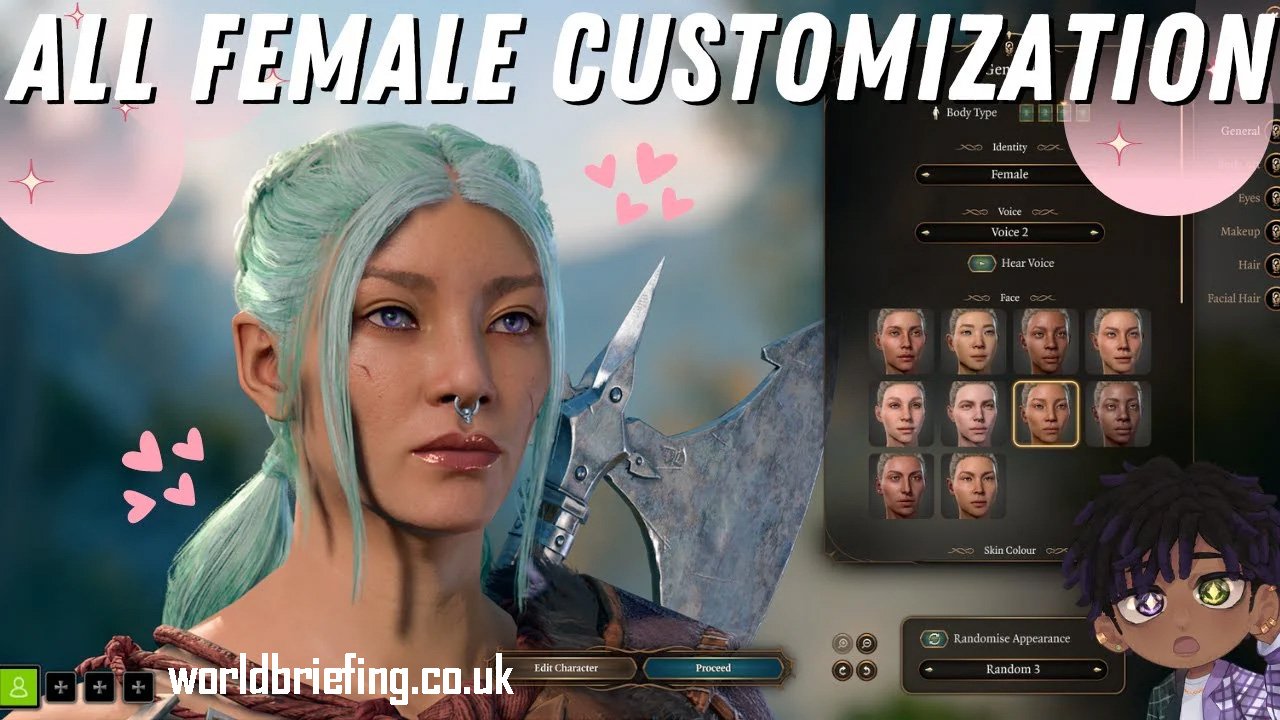
Appearance Customization in Baldur’s Gate 3 Character Creation
Beyond stats and abilities, appearance customization is incredibly detailed. You can modify:
- Face presets
- Skin tone
- Eye color (including heterochromia)
- Hair style and color
- Scars and tattoos
- Horn styles (for Tieflings)
- Makeup options
The game’s cinematic presentation makes your character visible in countless cutscenes, so appearance matters more than in many RPGs.
Origin Characters vs Custom Characters
Origin characters come with pre-written backstories and personal questlines. Some well-known examples include:
- Astarion
- Shadowheart
- Gale
- Lae’zel
- Wyll
Playing as one of them provides unique internal monologues and additional story layers. However, you sacrifice full narrative freedom.
Custom characters allow you to create your own identity but rely on companions to drive personal story arcs.
Multiclassing in Baldur’s Gate 3 Character Creation
Once you progress in the game, you can multiclass—combining levels from different classes. This adds enormous build flexibility.
Examples include:
- Paladin/Warlock (high Charisma synergy)
- Rogue/Fighter (extra attack potential)
- Sorcerer/Cleric (hybrid spellcasting)
Multiclassing requires understanding stat synergy and spellcasting rules, but it dramatically expands gameplay options.
Role-Playing Considerations
Baldur’s Gate 3 character creation isn’t just about optimization. It’s about identity.
Consider:
- Are you morally good, neutral, or evil?
- Do you prefer diplomacy or intimidation?
- Will you romance companions?
- Are you loyal or manipulative?
Charisma-heavy characters excel in dialogue, while Wisdom-based builds notice hidden clues. Your build influences story outcomes in subtle ways.
Tips for Beginners
If you’re new to Baldur’s Gate 3 character creation, here are some practical suggestions:
- Choose a straightforward class like Fighter or Ranger.
- Focus on one main ability score.
- Pick a race that complements your class.
- Don’t overthink early decisions—you can respec later.
- Read spell descriptions carefully.
The game allows you to adjust your build after meeting certain NPCs, making experimentation less risky.
Advanced Build Strategies
Experienced players may want to optimize:
Action Economy
Maximizing bonus actions and reactions improves efficiency.
Crowd Control
Spells like Hold Person or Sleep can change the tide of battle.
Synergy with Companions
Balance your party roles—tank, healer, damage dealer, and utility caster.
In Baldur’s Gate 3 character creation, building with party composition in mind leads to smoother gameplay.
How Baldur’s Gate 3 Character Creation Reflects D&D 5e
The system closely mirrors Fifth Edition Dungeons & Dragons rules, including:
- Advantage and disadvantage mechanics
- Spell slots
- Saving throws
- Skill checks
Fans of tabletop gaming will appreciate how faithfully the mechanics are translated into digital form.
Common Mistakes to Avoid
- Spreading ability points too thin.
- Ignoring Constitution (hit points matter).
- Choosing spells without understanding concentration mechanics.
- Overlooking racial traits.
- Focusing only on combat without considering dialogue skills.
Avoiding these pitfalls ensures a smoother early game experience.
Why Baldur’s Gate 3 Character Creation Stands Out
Many RPGs offer customization, but Baldur’s Gate 3 character creation goes deeper by integrating choices into narrative consequences.
Your race affects prejudice.
Your class changes dialogue.
Your background unlocks story moments.
Your moral choices reshape alliances.
Few games blend mechanics and storytelling this seamlessly.
Final Thoughts on Baldur’s Gate 3 Character Creation
Creating your hero in baldur’s gate 3 character creation is more than assigning stats—it’s crafting a living, reactive identity in a dynamic world. From race and class to background and moral alignment, every choice echoes throughout your journey.
Whether you choose a noble Paladin, a cunning Rogue, a mysterious Warlock, or embrace the Dark Urge, the system empowers you to tell a story uniquely your own.
With immense replay value, cinematic storytelling, and deep mechanical systems, Baldur’s Gate 3 character creation remains one of the finest character-building experiences in modern gaming.
