


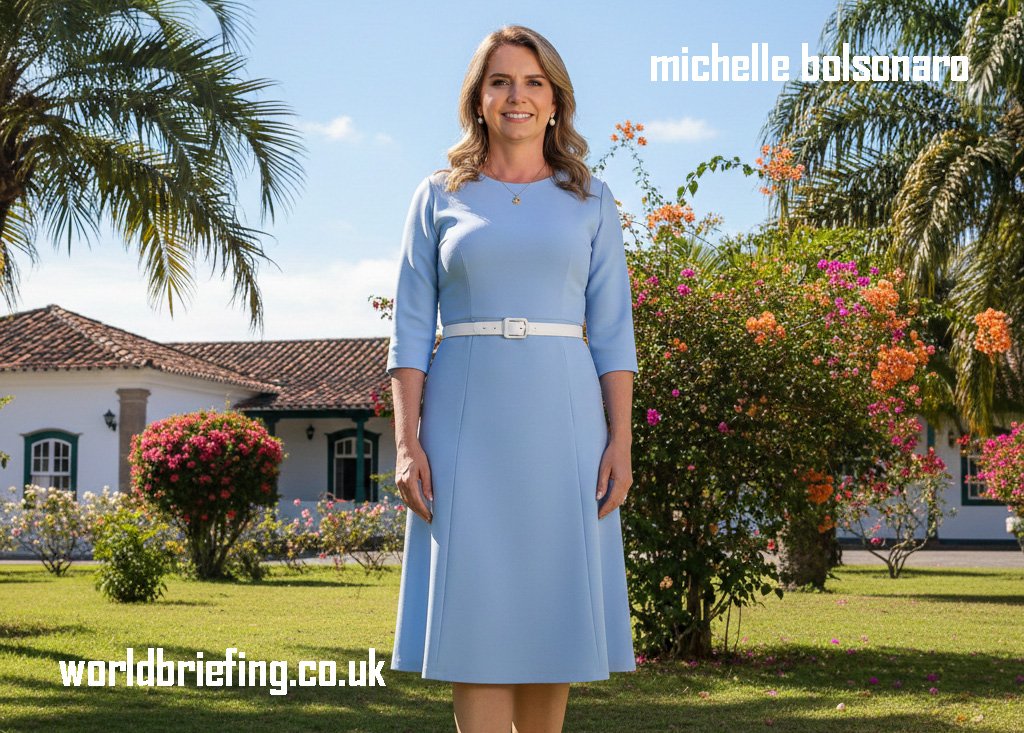
In recent years, the name Michelle Bolsonaro has gained significant international attention. Known for her public presence, advocacy work, and influence within Brazil’s political landscape, she emerged as one of the most recognizable First Ladies in the country’s modern history. Discussions surrounding Michelle Bolsonaro often extend beyond ceremonial duties, highlighting her social initiatives, communication style, and evolving political relevance.
This detailed article explores Michelle Bolsonaro‘s life journey, family background, rise to prominence, social projects, controversies, political influence, and future prospects in Brazilian politics.
Early Life and Background
Michelle Bolsonaro, born Michelle de Paula Firmo Reinaldo on March 22, 1982, in Ceilândia, a satellite city near Brasília, Brazil, grew up in a modest environment. Ceilândia is known for its working-class population, and her upbringing significantly shaped her public identity.
Raised in a Christian household, Michelle developed strong religious values that later became central to her public persona. Her early life was marked by economic challenges, and she often referenced her humble origins during public speeches, connecting with many Brazilians from similar backgrounds.
Before entering national politics, Michelle worked in administrative roles and held positions within government offices. These experiences allowed her to gain familiarity with Brazil’s bureaucratic structure long before she became a national public figure.
Meeting Jair Bolsonaro
Michelle’s life changed dramatically after meeting Jair Bolsonaro, a congressman at the time who later became Brazil’s president.
The couple married in 2007. Their relationship attracted attention due to differences in age and public profile. As Jair Bolsonaro’s political career advanced, Michelle gradually transitioned from a private individual into a prominent political spouse.
Their marriage became a visible part of Bolsonaro’s political image, emphasizing family values, religious faith, and conservative cultural themes.
Becoming Brazil’s First Lady
In 2019, when Jair Bolsonaro assumed office as President of Brazil, Michelle Bolsonaro became First Lady. Unlike some predecessors who maintained largely ceremonial roles, she quickly developed a distinct public identity.
Her tenure as First Lady focused on social inclusion and humanitarian programs. Michelle prioritized outreach initiatives aimed at vulnerable populations, including people with disabilities and low-income communities.
Her approachable communication style helped her gain visibility both nationally and internationally.
Advocacy for People with Disabilities
One of Michelle Bolsonaro’s most recognized contributions involved advocacy for individuals with disabilities.
She frequently used Brazilian Sign Language (Libras) during speeches, becoming one of the first Brazilian First Ladies to communicate publicly in sign language. This effort drew widespread attention and praise, highlighting accessibility issues often overlooked in politics.
Her advocacy programs promoted:
- Inclusion policies
- Educational opportunities
- Employment access
- Public awareness campaigns
By emphasizing accessibility, Michelle expanded the traditional role of a First Lady into active social engagement.
Religious Identity and Public Messaging
Faith plays a central role in Michelle Bolsonaro’s public image. She is closely associated with Brazil’s evangelical Christian community, a powerful social and political group.
Her speeches often include references to spirituality, family values, and moral responsibility. This religious alignment strengthened her connection with conservative voters who formed a major support base for the Bolsonaro administration.
Observers noted that Michelle’s tone often differed from her husband’s more confrontational political style, offering a softer and more empathetic public presence.
Communication Style and Media Presence
Michelle Bolsonaro became widely recognized for her polished public communication skills. She frequently appeared at national ceremonies, charity events, and international gatherings.
Her speeches emphasized unity, compassion, and social service rather than partisan rhetoric. This approach helped broaden her appeal beyond strictly political audiences.
Social media also played a significant role in shaping her image. Through online platforms, she shared moments from official events, family life, and charitable activities, strengthening direct engagement with supporters.
Role During Major National Events
Throughout her time as First Lady, Michelle participated in numerous state initiatives and crisis responses.
During public health and economic challenges facing Brazil, she appeared alongside government officials at community outreach programs. Her presence reinforced messaging around social solidarity and volunteerism.
These activities increased her visibility as more than a ceremonial figure, positioning her as an active participant in public life.
Public Popularity and Support Base
Michelle Bolsonaro developed a dedicated following among conservative and religious communities. Many supporters viewed her as relatable, citing her background, faith, and advocacy work.
Public opinion surveys often showed that she maintained higher approval ratings than other political figures within the administration. Analysts suggested that her personal narrative resonated with voters seeking authenticity and moral leadership.
Her popularity fueled speculation about a potential independent political career.
Controversies and Criticism
Like many prominent political figures, Michelle Bolsonaro’s public life has not been without controversy.
Critics scrutinized financial matters, political associations, and family connections. Media investigations occasionally generated debate regarding transparency and ethical standards.
Supporters argued that criticisms were politically motivated, while opponents viewed them as legitimate accountability issues. These controversies became recurring topics in Brazilian political discussions.
Relationship with Brazilian Politics
Although Michelle Bolsonaro never held elected office during her time as First Lady, her influence within political circles became increasingly evident.
She participated in campaign events, addressed political audiences, and played a symbolic role in mobilizing conservative voters.
Political analysts frequently debated whether Michelle represented a future leadership figure within Brazil’s right-leaning political movement.
Influence on Women in Politics
Michelle Bolsonaro’s visibility sparked conversations about the evolving role of women in Brazilian politics.
While she embraced traditional family values, her active engagement in public initiatives demonstrated that First Ladies could hold significant social and political influence.
Her presence encouraged discussion about women’s leadership, public service, and representation in government.
International Attention
Michelle Bolsonaro attracted international media attention during state visits and diplomatic events. Foreign observers often compared her communication style with other modern First Ladies who expanded beyond ceremonial expectations.
Her advocacy work and public speeches contributed to Brazil’s international image, particularly among religious and humanitarian organizations.
Life After the Presidency
Following the end of Jair Bolsonaro’s presidential term, Michelle Bolsonaro remained a prominent public figure.
She continued participating in political gatherings, religious events, and social initiatives. Her ongoing visibility suggested that her influence extended beyond the traditional timeframe associated with First Ladies.
Observers noted that she maintained strong connections with political supporters, reinforcing speculation about future ambitions.
Potential Political Future
One of the most discussed topics surrounding Michelle Bolsonaro is the possibility of her running for political office.
Several factors support this speculation:
- Strong recognition nationwide
- Established support among conservative voters
- Public speaking experience
- Charitable and advocacy background
Some analysts believe she could pursue roles such as senator, governor, or even presidential candidate in the future.
Public Image and Personal Branding
Michelle Bolsonaro’s public image blends multiple identities:
- Religious advocate
- Social activist
- Political partner
- Public communicator
Her carefully curated presentation emphasizes humility, faith, and service. This branding strategy differentiates her from more traditional political figures.
Family Life
Family has remained central to Michelle Bolsonaro’s narrative. She often highlights motherhood and marriage as core aspects of her identity.
Her role within the Bolsonaro family has contributed to a broader political image centered on traditional values and personal loyalty.
Media Representation
Brazilian media coverage of Michelle Bolsonaro varies widely depending on political perspectives.
Supportive outlets highlight her charitable initiatives and accessibility advocacy, while critical publications focus on political controversies and ideological alignment.
This polarization reflects Brazil’s broader political climate.
Social Initiatives and Legacy
Michelle Bolsonaro’s initiatives emphasized inclusion, social care, and volunteer engagement. Programs supporting marginalized communities remain among her most cited achievements.
Whether viewed through a political or humanitarian lens, her tenure reshaped expectations for First Ladies in Brazil.
Cultural and Political Impact
Michelle Bolsonaro’s rise illustrates how modern political spouses can become influential figures independently of elected office.
Her journey from a working-class background to national prominence reflects broader social dynamics within Brazilian society, including religion’s role in politics and the importance of personal storytelling in leadership.
Challenges Ahead
If Michelle Bolsonaro chooses to pursue a formal political career, she may face several challenges:
- Polarized political environment
- Intense media scrutiny
- Expectations shaped by previous administrations
- Balancing advocacy identity with political strategy
Navigating these complexities will determine her long-term impact.
Legacy in Brazilian Public Life
Regardless of future political ambitions, Michelle Bolsonaro has already left a lasting imprint on Brazil’s public sphere.
Her emphasis on accessibility and communication broadened public expectations for political spouses. By actively engaging with citizens and social causes, she transformed a traditionally symbolic role into one associated with advocacy and influence.
Conclusion
Michelle Bolsonaro’s story represents more than the biography of a First Lady. It reflects the evolving intersection of politics, religion, media, and social activism in contemporary Brazil.
From humble beginnings in Ceilândia to national and international visibility, she has shaped public discourse through advocacy, communication, and symbolic leadership. Whether admired or criticized, her presence continues to generate discussion across Brazil and beyond.
