


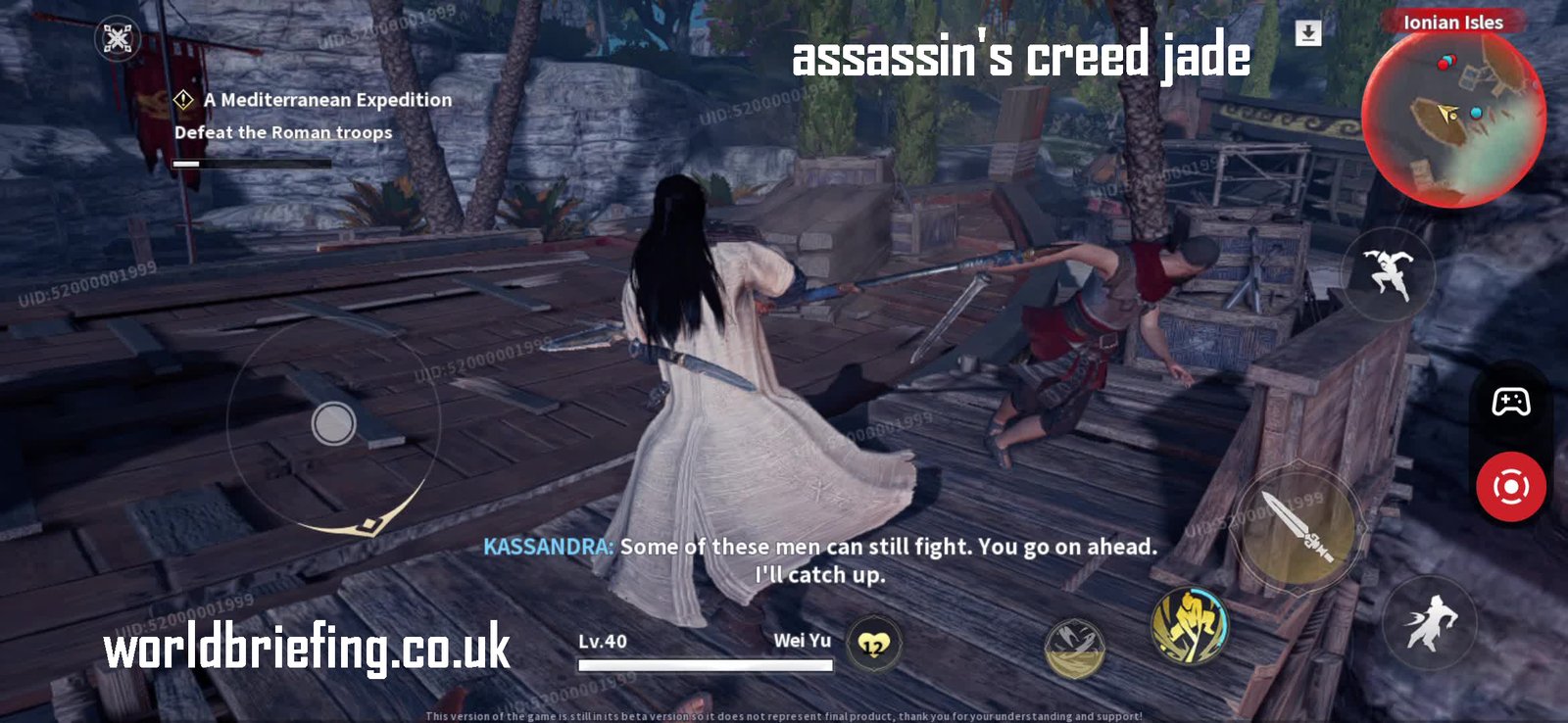
The Assassin’s Creed franchise has long been associated with sprawling historical worlds, stealth-driven gameplay, and deeply layered storytelling. From Renaissance Italy to Ancient Egypt, the series has consistently transported players across time and continents. Now, with Assassin’s Creed Jade, the franchise ventures into new territory—both geographically and technologically—by bringing a full-scale open-world Assassin’s Creed experience to mobile platforms.
Developed by Ubisoft in collaboration with Level Infinite, Assassin’s Creed Jade represents a significant shift in how AAA gaming experiences can be delivered on smartphones. Set in Ancient China during the Qin dynasty, this ambitious title blends familiar franchise mechanics with new customization systems and touch-optimized controls.
In this in-depth article, we’ll explore the setting, gameplay, story elements, development background, historical inspirations, and what makes Assassin’s Creed Jade one of the most intriguing entries in the series.
The Historical Setting of Assassin’s Creed Jade
One of the most exciting aspects of Assassin’s Creed Jade is its setting. The game takes players to third-century BCE China, during the era of the Qin dynasty—the period when the first emperor unified China.
The time frame centers around the reign of Qin Shi Huang, a ruler known for monumental achievements and authoritarian governance. His reign saw the early construction of what would later become the Great Wall of China, as well as the creation of the Terracotta Army.
Unlike previous mainline titles that focused on Western history, Assassin Creed Jade immerses players in Eastern historical lore. This new backdrop offers architectural styles, political conflicts, and cultural elements that feel distinct from earlier entries like Assassin Creed Valhalla or Assassin’s Creed Odyssey.
The Qin dynasty was marked by strict laws, centralization of power, and large-scale infrastructure projects. This makes it fertile ground for Assassin’s Creed’s trademark tension between order and freedom—a core theme throughout the franchise.
Assassin’s Creed Jade Gameplay Overview
Assassin’s Creed Jade aims to deliver a console-quality experience tailored specifically for mobile devices. Unlike earlier mobile spin-offs that simplified mechanics, this title features:
- Open-world exploration
- Parkour movement
- Stealth assassinations
- Combat with multiple weapon types
- Story-driven missions
The developers have emphasized that the gameplay retains the franchise’s DNA while adapting to touchscreen controls.
Parkour and Movement in Assassin’s Creed Jade
Fluid movement has always been central to Assassin’s Creed. In Assassin’s Creed Jade, players can climb buildings, scale mountains, leap across rooftops, and traverse forests.
Touch-optimized controls allow for smooth navigation, with virtual joysticks and contextual buttons designed to replicate the experience of console controllers. While adjustments are inevitable due to platform differences, early previews suggest that movement feels surprisingly responsive.
Combat Mechanics in Assassin’s Creed Jade
Combat in Assassin’s Creed Jade follows the RPG-style direction introduced in modern entries. Players can equip different weapon types, including swords, spears, and ranged options.
Expect features such as:
- Light and heavy attacks
- Dodge and parry systems
- Special abilities
- Skill progression
The combat system blends stealth and open confrontation, allowing players to choose between silent assassinations or direct engagement.
Customization plays a larger role here than in many earlier titles. For the first time in a major Assassin’s Creed experience, players can fully customize their own protagonist rather than stepping into the role of a predefined character.
Character Customization in Assassin’s Creed Jade
A standout feature of Assassin’s Creed Jade is the ability to create your own assassin. Unlike protagonists such as Ezio Auditore or Bayek of Siwa, this game offers deeper player agency.
Customization options include:
- Facial features
- Hairstyles
- Clothing and armor
- Skill builds
This shift aligns with modern RPG design philosophies, where player identity is central to immersion. By allowing players to craft their own character, Assassin’s Creed Jade creates a more personalized narrative experience.
The Storyline of Assassin’s Creed Jade
Though detailed plot elements are still evolving, Assassin’s Creed Jade centers on the hidden conflict between the Assassins and the Templars during the Qin dynasty.
Themes likely include:
- Resistance against tyranny
- The cost of unity
- The balance between chaos and order
Given the historical context, players may encounter imperial politics, military campaigns, and philosophical debates surrounding governance.
The Qin dynasty’s emphasis on Legalism—an authoritarian philosophy—fits naturally within the Assassin’s Creed universe, which traditionally champions freedom of thought and resistance against oppression.
Assassin’s Creed Jade and the Mobile Gaming Revolution
Mobile gaming has evolved dramatically over the past decade. Once limited to casual puzzle games, smartphones now support expansive open-world titles.
Assassin’s Creed Jade demonstrates how major franchises are adapting to this shift. By delivering a high-quality experience on mobile, Ubisoft signals confidence in the platform’s technical capabilities.
Unlike cloud-based streaming titles, Assassin’s Creed Jade is designed specifically for mobile hardware, optimizing performance and controls for smaller screens.
This move positions the franchise to reach new audiences—particularly in Asian markets, where mobile gaming dominates.
Visual Design and World-Building in Assassin’s Creed Jade
The environments in Assassin’s Creed Jade showcase classical Chinese architecture, mountainous landscapes, bamboo forests, and ancient cities.
Attention to detail appears consistent with the franchise’s historical dedication. Ubisoft has historically collaborated with historians and cultural consultants to ensure authenticity, and this title continues that tradition.
From bustling markets to imperial palaces, the world is designed to feel alive and immersive.
Lighting effects, character animations, and environmental textures demonstrate how far mobile graphics have advanced. The visual presentation narrows the gap between handheld and console gaming.
Comparing Assassin’s Creed Jade to Mainline Titles
When comparing Assassin’s Creed Jade to major releases like Assassin’s Creed Origins or Assassin’s Creed Mirage, several distinctions emerge:
- Platform Focus – Designed exclusively for mobile.
- Custom Protagonist – Greater character personalization.
- Market Strategy – Strong emphasis on Asian audiences.
- Control Adaptation – Touchscreen-optimized gameplay.
However, the core pillars—stealth, parkour, combat, and historical immersion—remain intact.
Assassin’s Creed Jade and Ancient Chinese History
The Qin dynasty was transformative. It standardized currency, measurements, and written language across China.
Under Qin Shi Huang, massive projects reshaped the empire. However, heavy taxation and forced labor sparked widespread discontent.
This historical tension provides rich narrative opportunities for Assassin’s Creed Jade. The series has always thrived on exploring gray areas of history, and this era offers dramatic material.
Players may witness early Great Wall construction, interact with imperial officials, or uncover conspiracies tied to imperial power.
Multiplayer and Online Elements in Assassin’s Creed Jade
While the core experience appears story-driven, there is speculation about cooperative or online features.
Mobile platforms lend themselves to live-service elements, including:
- Seasonal events
- Limited-time challenges
- Cosmetic updates
- Community missions
If implemented thoughtfully, these systems could enhance replayability without compromising narrative integrity.
Monetization and Accessibility in Assassin’s Creed Jade
One of the most discussed aspects of Assassin’s Creed Jade is its business model. As a mobile title, it is expected to adopt a free-to-play structure.
This could involve:
- Cosmetic purchases
- Optional battle passes
- In-game currency systems
The challenge lies in balancing monetization with gameplay fairness. Fans will be watching closely to ensure that progression does not become pay-to-win.
Accessibility is another advantage. By being available on smartphones, Assassin’s Creed Jade lowers the barrier to entry compared to console-exclusive titles.
Cultural Representation in Assassin’s Creed Jade
Setting the game in Ancient China marks a significant step toward broader cultural representation.
Previous titles explored Europe, the Middle East, North America, and parts of Africa. Assassin’s Creed Jade expands this global perspective.
Respectful and accurate portrayal of Chinese history is essential. Given Ubisoft’s track record with historical consultation, expectations are high.
The opportunity to explore Chinese philosophy, architecture, and warfare within the Assassin’s Creed framework opens new storytelling avenues.
Community Expectations for Assassin’s Creed Jade
The Assassin’s Creed fanbase is passionate and vocal. Reactions to Assassin’s Creed Jade range from excitement to cautious optimism.
Supporters appreciate:
- The long-requested Chinese setting
- Character customization
- High production value
Skeptics question:
- Mobile control limitations
- Monetization practices
- Depth compared to console entries
Ultimately, the game’s success will depend on its ability to meet franchise standards while embracing mobile innovation.
The Future Impact of Assassin’s Creed Jade
Assassin Creed Jade could redefine expectations for mobile AAA gaming.
If successful, it may encourage other franchises to develop high-quality mobile-exclusive entries. It could also influence how Ubisoft approaches future spin-offs and regional storytelling.
The game represents more than just another installment—it’s a strategic expansion into a rapidly growing market.
Why Assassin’s Creed Jade Matters
Assassin’s Creed Jade matters because it bridges tradition and innovation. It retains the franchise’s foundational elements—stealth, historical immersion, and philosophical conflict—while embracing a new platform.
By exploring Ancient China during the Qin dynasty, it delivers a fresh historical lens rarely seen in mainstream Western games.
It also demonstrates how far mobile technology has progressed. What once seemed impossible—an open-world Assassin’s Creed on a smartphone—is now reality.
Final Thoughts on Assassin’s Creed Jade
Assassin’s Creed Jade stands at the crossroads of history, technology, and global gaming culture. Developed by Ubisoft in partnership with Level Infinite, it signals a bold step forward for both the franchise and the mobile gaming industry.
With its richly detailed Qin dynasty setting, customizable protagonist, and full-scale open-world gameplay, Assassin’s Creed Jade has the potential to expand the boundaries of what players expect from mobile titles.
While questions remain about monetization and long-term support, the ambition behind this project is undeniable.
For longtime fans and newcomers alike, Assassin Creed Jade offers a fresh opportunity to experience the timeless battle between Assassins and Templars—this time, beneath the shadow of ancient Chinese dynasties.
